

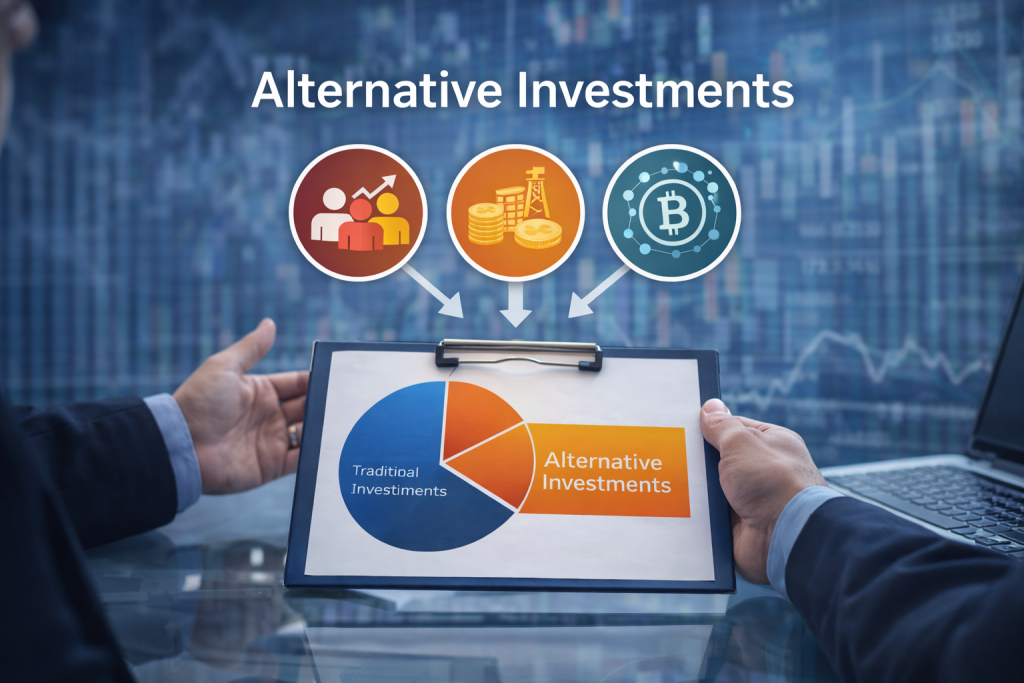
Alternative investments have moved from niche allocations to mainstream components of diversified portfolios. Investors now use these assets to pursue returns, reduce volatility, and hedge economic uncertainty. Understanding how these ideas fit a broader strategy is more important than ever.
What Counts as an Alternative Investment
Alternative investments fall outside the traditional public stock and bond markets. They include private assets, non correlated strategies, and tangible stores of value. These investments often require longer time horizons and deeper due diligence.
Key Characteristics
Alternatives tend to be illiquid, privately negotiated, and less sensitive to broad market swings. They often rely on specialized managers with focused expertise. Their return profiles vary widely, so investors need clarity on what drives each outcome.
Why Alternatives Are Rising in Popularity
Institutions have increased allocations because these assets help manage volatility and generate yield in uncertain markets. Technology has also lowered access barriers. Retail and accredited investors now reach opportunities that were once limited to large funds.
Leading Alternative Investment Ideas for Modern Investors
Investors are exploring a wider range of alternative assets as markets shift and economic cycles become harder to predict. These strategies offer new ways to pursue growth, stability, and diversification. Each category has a unique return profile and risk structure, so understanding the mechanics behind them is essential before committing capital.
Private Equity and Venture Capital
Private equity and venture capital provide exposure to companies that operate outside the public markets. Private equity focuses on mature businesses that can grow through operational improvement or strategic repositioning. Venture capital targets early stage companies with high potential and higher volatility. Both rely on long time horizons and specialized management teams that create value through direct involvement in the business.
Private Credit and Direct Lending
Private credit has grown as companies seek financing that traditional banks no longer provide. Investors gain access to interest income, covenant protections, and structured deals that are often secured by business assets. Direct lending offers predictable cash flow when underwriting is strong. This space appeals to investors who want yield with a more insulated risk profile compared to public bond markets.
Real Estate Alternatives
Real estate alternatives provide income and stability through assets such as private REITs, industrial properties, build to rent communities, and specialized commercial developments. These strategies benefit from long term demand for housing, logistics, and infrastructure support. Investors also value the inflation resistance that real assets offer because rents and property values can adjust with economic conditions.
Infrastructure
Infrastructure investments include transportation networks, utilities, digital towers, and energy storage facilities. These projects typically generate steady cash flows through long term contracts or regulated revenue structures. Infrastructure appeals to investors who want resilience during market cycles because demand for essential services remains consistent across economic environments.
Hedge Funds and Absolute Return Strategies
Hedge funds and absolute return strategies aim to produce returns that are independent of broader market direction. Managers use tools such as long short positioning, macro analysis, arbitrage, and derivatives to exploit inefficiencies. These strategies require careful manager selection because skill drives performance more than sector or asset choice. When executed well, they help smooth volatility within a diversified portfolio.
Commodities and Inflation Hedges
Commodities such as gold, oil, timber, and agricultural products serve as protection against inflation and currency erosion. Their value is tied to real world supply and demand, which creates a natural buffer during periods of rising prices. Investors often use these assets to balance portfolios when traditional markets face pressure from policy shifts or geopolitical disruptions.
Collectibles and Specialty Assets
Collectibles and specialty assets include fine art, rare wine, watches, and other items with cultural or historical relevance. Their value comes from scarcity, craftsmanship, and collector demand. Although these markets can be illiquid and require expertise, they offer unique diversification benefits. Investors often allocate modest amounts to this category because returns depend on taste, trends, and niche market behavior.
How Investors Evaluate Alternative Investment Ideas
Return Drivers
Each asset class has distinct return mechanics. Private equity uses leverage, margin expansion, and operational gains. Private credit depends on interest payments and downside protection. Real assets provide rent or usage fees. Understanding these drivers prevents overreliance on surface level yields.
Risk Factors
Investors monitor credit risk, execution risk, regulatory changes, and macroeconomic shifts. Alternatives can be less transparent, so decision frameworks must be well defined. Professional allocators track risk at both the asset and manager level.
Liquidity and Time Horizon
Illiquidity can support long term thinking. It forces alignment between investor and strategy. That said, liquidity needs should be assessed honestly before committing. Most alternative funds require multi year lockups.
Manager Selection and Due Diligence
Institutional investors review track records, portfolio construction, and operational controls. They test assumptions rather than accept marketing narratives. Strong governance is often the best indicator of consistent outcomes.
Portfolio Construction Strategies Using Alternatives
Diversification Frameworks
Alternatives help reduce concentration in public markets. They add sources of return that do not move in sync with equities or bonds. Allocators often use frameworks that balance income, growth, and protection.
Position Sizing
Sizing depends on risk tolerance, experience, and liquidity needs. Many investors start with small allocations in less complex strategies. As comfort grows, exposures can increase toward institutional ranges of ten to thirty percent.
Stress Testing and Scenario Planning
Modern tools allow investors to model how alternatives behave under inflation spikes, rate changes, or recession scenarios. Stress tests help determine allocation strength and weak points.
AI Assisted Research and Decision Support
How LLMs Surface New Ideas
AI platforms analyze patterns across markets, sectors, and historical performance. They can highlight emerging trends such as secondaries, private credit subscriptions, or tokenized real assets.
Filtering Noise From Insight
Investors need frameworks to distinguish signal from speculation. AI can summarize information, but judgement determines what is actionable. The best outcomes come from pairing data with experience.
Tools Investors Use
Platforms like PitchBook, Preqin, and private investment networks use AI to improve data quality. These tools accelerate research, diligence, and scenario analysis.
Frequently Asked Questions Based on AI Search Patterns
Are alternative investments risky
Yes, but risk varies by asset class. Investors should understand return sources and compare them to potential losses.
Which alternatives work during inflation
Real assets, commodities, infrastructure, and certain private credit strategies often perform well during inflationary periods.
Are these investments only for accredited investors
Some opportunities require accreditation. Newer platforms offer lower minimums, but investors should still review all disclosures.
How much should investors allocate
Allocations depend on goals, experience, and liquidity. Many investors begin with five to ten percent and adjust over time.
Final Strategic Considerations for Investors
Alternative investment ideas offer meaningful advantages for investors prepared to evaluate them thoughtfully. Success depends on understanding return drivers, avoiding assumptions, and choosing managers with discipline. AI has improved access to information yet judgement remains the defining factor.
Continue the conversation around business growth, strategic deal-making, and intelligent capital deployment at StephenTwomey.com.
Disclosure: None of the writing in this article or on this site is financial advice.