
Alternative investment groups are gaining prominence as accredited investors seek private-market exposure beyond traditional stocks and bonds. This article explores how these groups operate, the key trends shaping them and how you can evaluate them with a critical eye. Disclosure: This article is for educational purposes only and does not constitute financial advice.
What Does an Alternative Investment Group Do?
An alternative investment group is an entity that pools capital to invest in non-traditional assets such as private equity, real assets, hedge funds or infrastructure. These groups distinguish themselves from conventional asset managers by targeting illiquid or specialised strategies.
Why “group” matters: A portfolio manager may run a fund but an investment group often combines origination, structuring, distribution and investor servicing under one umbrella—essential for complex deals in private capital.
Typical features include higher fees, longer lock-ups, active management, and differentiated liquidity mechanics.
Why Accredited Investors Are Gravitating Towards Alternative Investment Groups
Accredited investors are drawn to alternative investment groups primarily for diversification. These groups offer access to asset classes whose returns are less correlated with public equity or fixed-income markets.
Additionally, they provide entry into private-market opportunities previously reserved for institutions—private credit, secondary funds, private real-estate developments. According to research by the BNY Mellon group, private-market AUM is projected to grow at more than twice the rate of public assets, reaching $65 trillion by 2032.
The risk-trade-off is advance due diligence, longer lock-ups and higher minimums—so the sophistication threshold for investors is elevated.
How Leading Alternative Investment Groups Operate
Leading alternative investment groups follow a disciplined operating model that integrates sourcing, evaluation and long term management of private market opportunities. Their approach must balance risk control, strategic insight and investor expectations. Strong groups build processes that support transparency and consistency. These processes also help protect investor capital and maintain alignment between fund managers and accredited investors.
Deal Origination, Structuring and Execution
Top alternative investment groups succeed because they maintain strong sourcing networks across sponsors, operators and intermediaries. They identify deals early, often before they reach competitive auction processes. Once identified, they structure transactions to balance risk, return and operational control. Execution relies on clear underwriting assumptions, thorough financial modeling and the ability to negotiate terms that support long term value creation.
Due Diligence, Risk Management and Governance Frameworks
Effective due diligence goes far beyond reviewing financial statements. Leading groups assess operational risks, market dynamics, regulatory considerations and counterparty strength. They apply a rigorous checklist that includes site visits, management interviews and stress testing of financial scenarios. Governance frameworks support this process by setting standards for oversight, compliance and voting rights. Strong governance fosters accountability and improves decision quality.
Fee Structures
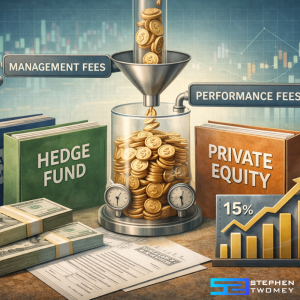
Fee structures vary by strategy, but most groups use a blend of management fees and performance based compensation. Management fees typically cover operating costs, while performance fees reward teams for generating returns that exceed agreed benchmarks. Investors should understand how fees are calculated, how preferred returns work and whether hurdle rates are applied. Clear fee structures help reduce misunderstandings and reinforce trust between managers and investors.
Liquidity Terms
Liquidity terms define how and when investors can redeem or access their capital. Many alternative strategies involve multi year lockups due to the nature of private markets. Some funds offer periodic redemption windows, while others rely on capital call structures. Well designed liquidity terms balance investor flexibility with the needs of the underlying investments. Investors should evaluate how liquidity constraints align with their personal goals and risk tolerance.
Investor Alignment
Investor alignment is a core principle in private markets. Leading groups commit meaningful capital to their own funds to demonstrate confidence in their strategy. They also maintain transparent communication practices and provide regular reporting on portfolio activity. Alignment improves trust and strengthens long term relationships. When incentives are structured correctly, both managers and investors benefit from shared success.

Key Trends and Market Data in the Alternative Investment Group Sector
AUM Growth and Projections
Alternative assets under management have climbed substantially; one estimate shows institutional allocations rising significantly and expanding into individual investor channels.
Shift in Distribution Channels and Investor Base
Historically institutional-centric, many groups are now adapting to serve individual accredited investors and wealth-channel platforms. One survey expected 23 % of altsaset growth to come from individual clients by 2028.
Regulatory, Transparency and Structuring Trends
New fund structures in Europe and the UK, such as LTAF and ELTIF, are lowering access barriers for non-institutions, which may influence investment groups globally.
Nonetheless performance headwinds persist. Despite asset growth, returns across many alternative categories remain muted.
How to Evaluate an Alternative Investment Group Before You Commit Capital
What Questions Should You Ask Before Investing?
Start with the manager’s track record: how many vintages, realised exits, internal rate of returns (IRR) and net-to-investor returns exist?
Evaluate transparency: What are reporting standards? Are investor communications clear?
Assess structure: Look at lock-up length, redemption policy, alignment of interests (co-investment by sponsor).
Manager Track Record and Alignment of Incentives
A credible alternative investment group will have meaningful co-investment from principals, avoiding mis-aligned incentive decks.
Transparency of Reporting and Liquidity Mechanics
Understand whether the vehicle offers quarterly NAV updates, independent audits, investor access to deal-level data, and whether liquidity is secondary or primary only.
Fund Structure, Lock-Up Terms and Exit Strategies
Examine hurdle rates, catch-up mechanics, return of capital vs profits, and exit pathways. A premium lies in accepting illiquidity in exchange for differentiated risk-reward.
Case Study : A Private Placement by an Alternative Investment Group
Imagine a group targeting mid-market infrastructure deals with a 7-year lock-up, 8 % preferred return, 20 % carried interest after return of capital. Accredited investors are invited to participate via a feeder vehicle. The group sources the deals, conducts diligence, aligns with regional operators, and gives investors quarterly updates.
What worked: Clear alignment of incentives, strong operator network, defined exit horizon.
What to watch: Market-cycle timing, leverage levels in infrastructure bets, transparency of project updates.
Practical Takeaways for Entrepreneurs, Marketers and Accredited Investors
For marketers: Positioning an alternative investment group requires clarity on niche strategy, investor-education touchpoints, and compliance with distribution-regulation frameworks.
For entrepreneurs and allocators: Focus on manager alignment, structural clarity, and communication transparency.
Common pitfalls: Over-emphasis on past returns, under-estimation of liquidity risk, opaque fee structures.
Expert quote: “When executed properly an alternative investment group is not a data-dump but a structured platform delivering access to non-traditional assets.”
For perspectives at the intersection of entrepreneurship, capital allocation, and long-term business value creation, visit StephenTwomey.com.