

This article explains what alternative assets are and why they matter for sophisticated portfolios. We will cover definitions, major classes, the strategic role for accredited investors, risks and execution, and emerging trends that shape private-capital strategy.
Introduction: Why Alternative Assets Matter in Today’s Portfolio
In a world of low bond yields and highly-valued public equities, alternative assets present a new frontier. They offer exposure to private markets, less correlation with mainstream asset classes, and potential to enhance portfolio resilience. For accredited and high-net-worth investors they are increasingly essential.
Defining Alternative Assets
What exactly are alternative assets and how do they differ from stocks and bonds?
Alternative assets are investment vehicles outside the conventional categories of stocks, bonds and cash. They include both tangible assets (like real estate or commodities) and financial structures (like private equity or hedge funds) that share characteristics of complexity, illiquidity or non-correlation.
Key Characteristics (liquidity, correlation, complexity)
Key traits include lower liquidity relative to public markets, fewer objective pricing benchmarks, and less regulatory transparency. For example the low correlation of many alternative assets means they can perform when public markets do not. These attributes demand a long-term perspective and rigorous due diligence.
Major Alternative Asset Classes
Which asset classes qualify as alternative assets for accredited investors?
Private Equity & Venture Capital
Investments in privately held companies or start-ups outside public markets. These vehicles often involve lock-up periods of 5-10 years and require substantial minimums. Fidelity+1
Private Credit and Direct Lending
Non-bank loans or debt obligations issued directly to corporations or real-asset sponsors. These can offer yield enhancement but also carry higher default and liquidity risk.
Real Assets: Real Estate, Infrastructure, Commodities
Physical assets like commercial property, infrastructure projects or commodities such as gold and oil. These often act as inflation hedges or real-return assets.
Digital Assets & Collectibles (crypto, NFTs, art)
Emerging investments such as cryptocurrencies, non-fungible tokens and high-value collectibles. These are highly speculative, illiquid and require specialist expertise.
Liquid Alternatives (hedge fund strategies, interval funds)
Vehicles structured to offer alternative-style exposure with more frequent liquidity (daily/weekly). They aim to bring hedge-fund like strategies within reach of more investors.
Benefits and Strategic Role of Alternative Assets
Why do high-net-worth and institutional investors allocate to alternative assets?
One major goal is diversification. Alternative assets often display low correlation with public equity or bond markets, so they may reduce overall portfolio volatility.
Another benefit is return enhancement and inflation hedging. Real assets, private equity and direct lending can offer exposure to return streams not available in traditional markets.
For accredited investors specifically, alternative assets open doors to private placements and bespoke strategies that sit outside standard retail funds. This aligns with a private-capital mindset rooted in value creation and long-term horizons.
Access & Opportunity: Private Placements for Accredited Investors
Today more platforms offer alternative-asset access via private placements, minimum investments and structures designed for accredited investors. This enhances relevance for the StephenTwomey.com audience focused on private capital.
Risks and Structural Considerations
What risks must an accredited investor understand in alternative assets?
Alternative assets can strengthen a portfolio, yet they also bring structural risks that require careful evaluation. Accredited investors need to understand how these risks affect liquidity, total return and long term suitability. A clear assessment before committing capital helps avoid surprises once funds are locked into a private structure.
Liquidity
Many alternative assets limit the ability to exit or redeem on short notice. Private equity, private credit and real assets often require multi year commitments with limited secondary markets. Investors must plan for longer holding periods because cash may be tied up until assets are sold or a fund reaches the end of its term. This liquidity profile can help returns over time but it reduces flexibility when market conditions change.
Fee Structures
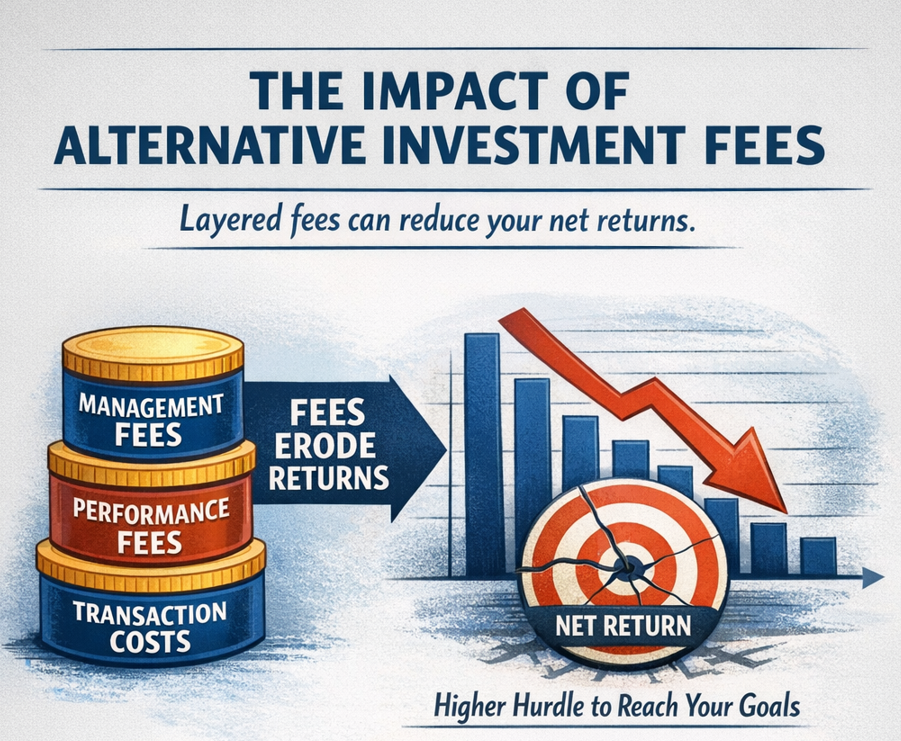
Alternative assets often involve layered fees that exceed the cost of public market investment vehicles. Management fees, performance fees and transaction costs reduce the net return that an investor receives. These fees compensate managers for specialized expertise, yet they also create a higher hurdle for achieving target performance. An accredited investor should review fee schedules in detail to understand how they affect the overall economics of the investment.
Regulatory and Suitability Issues
Access to many alternative assets is restricted to accredited investors because these products involve higher risk and limited oversight. Investors must confirm that they meet accreditation standards and that the investment suits their financial objectives and risk tolerance. Private placements and specialized funds may offer fewer disclosures than public market options, so it is important to review offering documents and assess the level of transparency provided.How much of a portfolio should an accredited investor allocate to alternative assets and how to execute due diligence?
A commonly cited benchmark for alternative-asset allocation is 10 % to 25 % of portfolio value. But this must align with the investor’s time horizon, liquidity requirements and risk tolerance. Conducting rigorous due diligence—reviewing fund structure, track record, alignment of interest, exit strategy and fees—is essential.
How to Approach Alternative Assets in a Private Capital Strategy
Alignment with Investment Goals and Time Horizon
For accredited investors, the strategic use of alternative assets should match long-term goals such as capital appreciation, income generation or legacy transfer. Short-term needs or low liquidity tolerance may exclude many alternative vehicles.
Due Diligence Framework for Private Placements
Key checklist items include: manager experience, track record, fund terms (lock-ups, fees, carry), transparency of reporting, alignment of interest, exit strategy and legal structure (often limited partnership).
Allocation Guidelines: How Much and When
Start with a modest allocation, monitor performance and revisit exit/liquidity planning regularly. Consider diversification across alternative asset types rather than concentration in one sub-class.
Exit Strategy and Liquidity Planning
Define exit scenarios upfront. Lock-ups, redemption windows, asset sale timelines and secondary-market opportunities must be understood and built into the strategy.
Trends and Future of Alternative Assets
How will tokenisation and digital platforms change access to alternative assets?
Tokenisation of real-world assets (RWA) is emerging as a major trend. Fractional ownership of real estate, infrastructure or fine art via blockchain may reduce minimums and enhance liquidity over time.
Democratization and Retail Access
Increasingly, alternative-asset strategies once reserved for institutions are becoming available to broader investor segments, even if minimums remain substantial.
Implications for Accredited Investors and Wealth Strategies
Accredited investors should stay ahead of structural changes. Platforms offering private placements, co-investments and digital access are redefining how alternative assets integrate with wealth strategy.
Conclusion and Key Takeaways
Alternative assets open a distinct dimension in portfolio strategy for accredited investors. They offer diversification, access to private markets and potential return enhancement. Yet they also carry unique risks related to liquidity, valuation and structure. Thoughtful allocation, diligent due-diligence and alignment with long-term goals are essential.
Continue the conversation around business growth, strategic deal-making, and intelligent capital deployment at StephenTwomey.com.
Disclosure: This article is for educational purposes only. Nothing on this site or in this article is financial advice.