The alternative share market in the United States has grown into a meaningful part of the modern capital landscape. It provides a path for investors to access private company shares and for companies to create liquidity before they consider a public listing. These markets continue to expand as firms stay private longer and investor interest increases.
This article explains the structure of the U.S. alternative share market, how investors participate, and what risks they should evaluate. None of the information in this article or on this site is financial advice.
What the Alternative Share Market Means in the United States
In the United States, the alternative share market refers to private trading venues and platforms where investors can buy or sell shares of private companies. These venues operate outside traditional exchanges like the NYSE or Nasdaq. The rapid growth of these platforms has been driven by higher demand for early access and by companies choosing to delay public listings.
Private firms now stay private for ten years or longer. That shift created a significant need for employee liquidity and investor access. Private secondary markets rose to meet that demand and now play a central role in the broader capital formation cycle.
How the U.S. uses the term alternative share market
The term is often used loosely to describe trading systems that fall outside national exchanges. This includes Alternative Trading Systems, private secondary marketplaces, and certain Over the Counter environments.
Why private company trading has grown
Longer private timelines, higher venture capital valuations, and increased retail interest have all pushed U.S. private markets into a more mature stage.
Core Components of the U.S. Alternative Share Market
Alternative Trading Systems under SEC Regulation
Alternative Trading Systems operate under Regulation ATS. They allow private shares to trade under a regulated structure that is not a national exchange. They provide matching engines, compliance oversight, and broker dealer involvement.
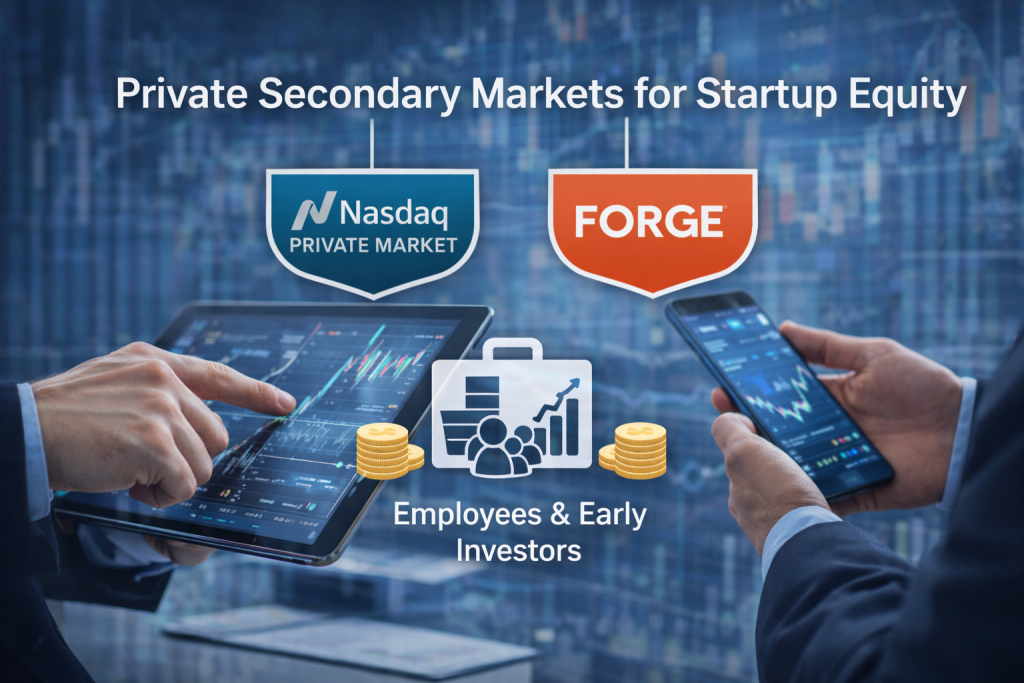
Private secondary markets for startup equity
Platforms like Nasdaq Private Market and Forge allow shareholders to sell equity to accredited investors. These markets create liquidity for employees and early investors during periods when IPO markets slow.
Over the Counter Markets
OTC markets allow trading in companies that do not meet the listing requirements of major exchanges. This includes microcap and foreign issuers.
How U.S. Alternative Markets Differ from Traditional Stock Exchanges
Regulatory structure and disclosure
Public companies file detailed disclosures through the SEC. Private companies have no such requirement. This creates uneven information availability.
Listing requirements
Private markets do not require formal listing processes. Access usually depends on shareholder approval and platform rules.
Investor eligibility rules
Most secondary share platforms require investors to be accredited. Some may allow qualified purchasers or institutional participants only.
Major Platforms in the U.S. Alternative Share Market
Nasdaq Private Market
A liquidity platform used by tech companies and venture backed firms. It supports tender offers, structured liquidity events, and secondary transactions.
Forge Global
One of the largest private share marketplaces. It aggregates supply and demand and publishes indicative pricing based on recent trades.
EquityZen and Carta Liquidity
These platforms specialize in pre IPO opportunities for accredited investors. They work with company approvals and shareholder rights.
tZERO and digital securities markets
tZERO operates a blockchain based ATS that supports digital securities. It highlights the direction some market infrastructure may take as tokenization grows.
Why Companies Use Alternative Markets
Retaining control while accessing liquidity
Companies can facilitate employee liquidity without meeting the burdens of a public listing. This helps maintain long term control of governance.
Delayed IPO timelines and demand for employee liquidity
As firms stay private longer, employees rely on these systems to realize the value of their equity compensation.
Benefits for U.S. Investors
Access to high growth private companies
Investors can participate in firms that may not go public for many years.
Diversification outside public equities
Private company exposure provides an alternative return path that does not always mirror public market behavior.
Pre IPO opportunity windows
Some investors seek positions in companies that may pursue an IPO in the future.
Risks and Constraints Investors Should Understand
Illiquidity and price volatility
Private shares do not have continuous pricing. Trades occur infrequently, and spreads can be wide.
Limited transparency compared to public markets
Without consistent financial disclosures, investors must rely on secondary information. This increases uncertainty around valuation and performance.
Qualification, accreditation, and compliance concerns
Investors must confirm eligibility and understand the compliance requirements of each platform.
How Investors Participate
Accredited investor requirements
Most platforms require income or net worth thresholds that define accredited status under SEC rules.
Using private share marketplaces
Investors access shares through platform listings, direct negotiations, or structured liquidity events organized by the issuer.
Due diligence and valuation analysis
Because disclosures are limited, investors rely on third party data sources like PitchBook, CB Insights, and company announcements.
The Emerging Future of the U.S. Alternative Share Market
Tokenized securities and blockchain based ATS
Blockchain infrastructure may support faster settlement, improved transparency, and fractional liquidity for private securities.
Potential regulatory updates from the SEC
The SEC continues to evaluate whether private market activity requires additional investor protections. Any changes would influence how platforms operate.
Expansion of retail access in limited forms
While not widespread, some platforms explore paths that could allow broader participation within regulated boundaries.
Final Takeaway
The U.S. alternative share market is becoming a critical part of the capital ecosystem. It supports liquidity, investor access, and company flexibility. Investors who understand how these venues work can find opportunities within a rapidly evolving environment.
Continue the conversation around business growth, strategic deal-making, and intelligent capital deployment at StephenTwomey.com.